
Exciting new series on “Voice, Body and Movement for Lawyers – How to connect with the jury and find Justice Through Dramatic Technique!”
Click here to find out more
New York City’s new Non-Primary Residence Property Surcharge—commonly known as the pied-à-terre tax—can impose substantial annual property-tax liability on certain high-value one- to three-family homes, condominium units, and cooperative apartments. Whether the surcharge applies depends not only on how the property is used, but also on its Department of Finance market value, ownership structure, occupants, and the available evidence of primary residence. Consequently, even a home occupied full-time may face exposure when it is held in a trust or business entity, occupied by a family member or tenant, undergoing construction, or affected by a recent ownership change.
This program will provide attorneys with a practical guide to the governing statutes, DOF rules, and administrative procedures. It will address covered properties, surcharge calculation and valuation, primary-residence claims and exclusions, DOF verification filings, administrative and judicial review, billing and penalty exposure, and current litigation—including O’Brien and any subsequent challenges to the City’s implementation of the surcharge.
Learning Objectives
Upon completion of the program, participants will be able to:

This course is meant for lawyers of all levels and areas of practice, and in it, we will explore way...

This program examines the legal standards and factors courts throughout the United States apply when...

Class action litigation presents significant legal and business challenges for employers and corpora...

I was wrongfully separated from the military and I will get no military pay and disability retiremen...
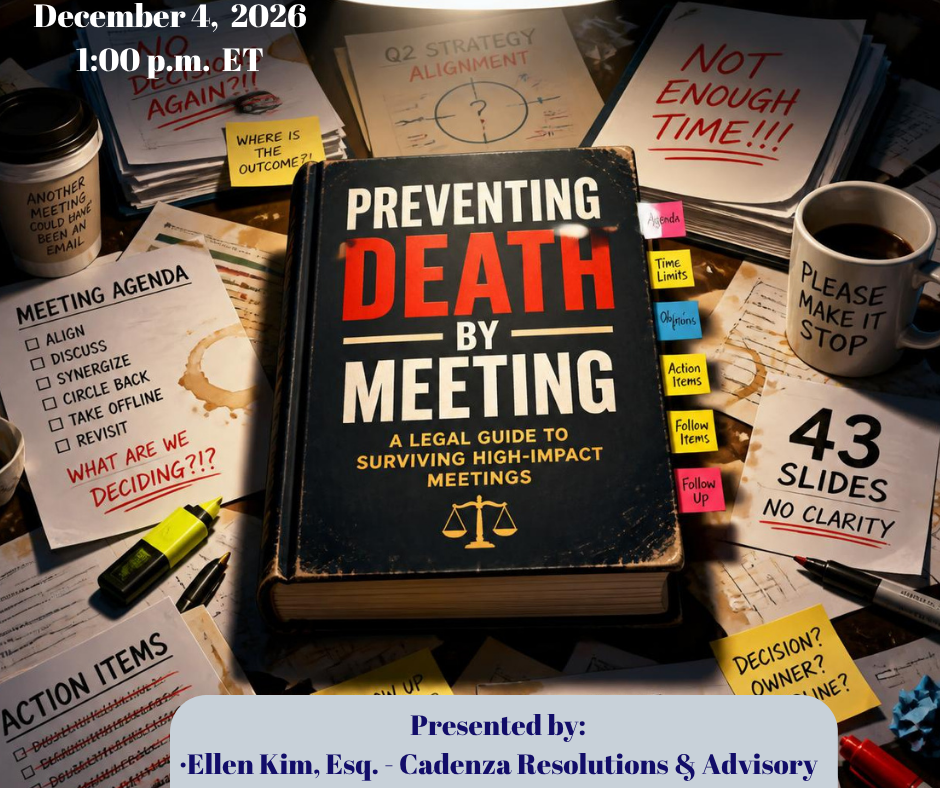
Lawyers lose hundreds of billable and operational hours every year to poorly managed meetings. Unfoc...

During this course you will take a deep dive into federal bid protest litigation at the U.S. Court o...
Incorrect military records prevent active duty and reserve Soldiers, Airmen, Guardians, Marines, Sai...
2026 was a very important year when it comes to federal procurement developments, Artificial Intelli...
Class action waivers in arbitration agreements remain enforceable, but a decade of U.S. Supreme Cour...
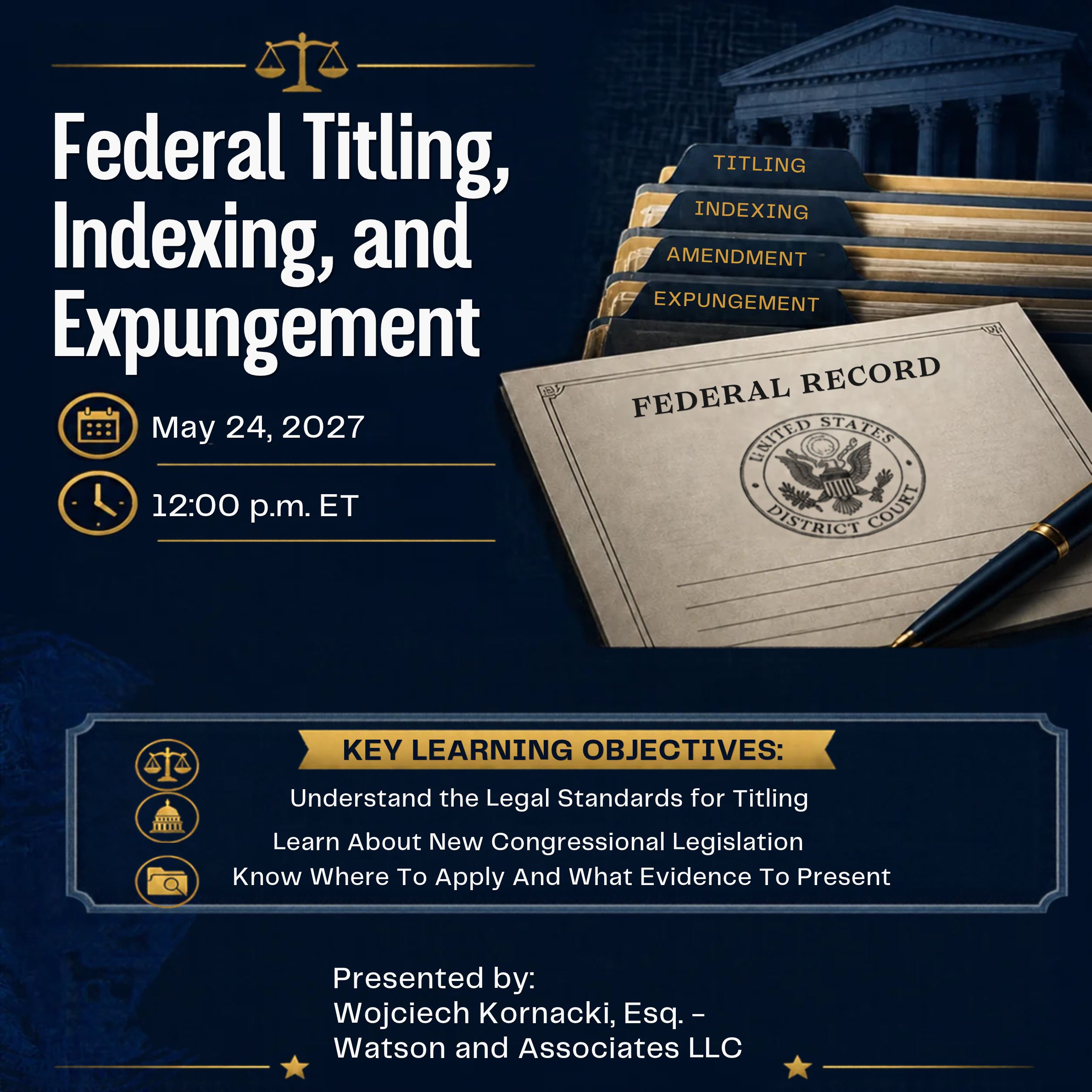
This course analyzes federal titling and indexing requirements and how to expunge or amend your reco...