
Exciting new series on “Voice, Body and Movement for Lawyers – How to connect with the jury and find Justice Through Dramatic Technique!”
Click here to find out more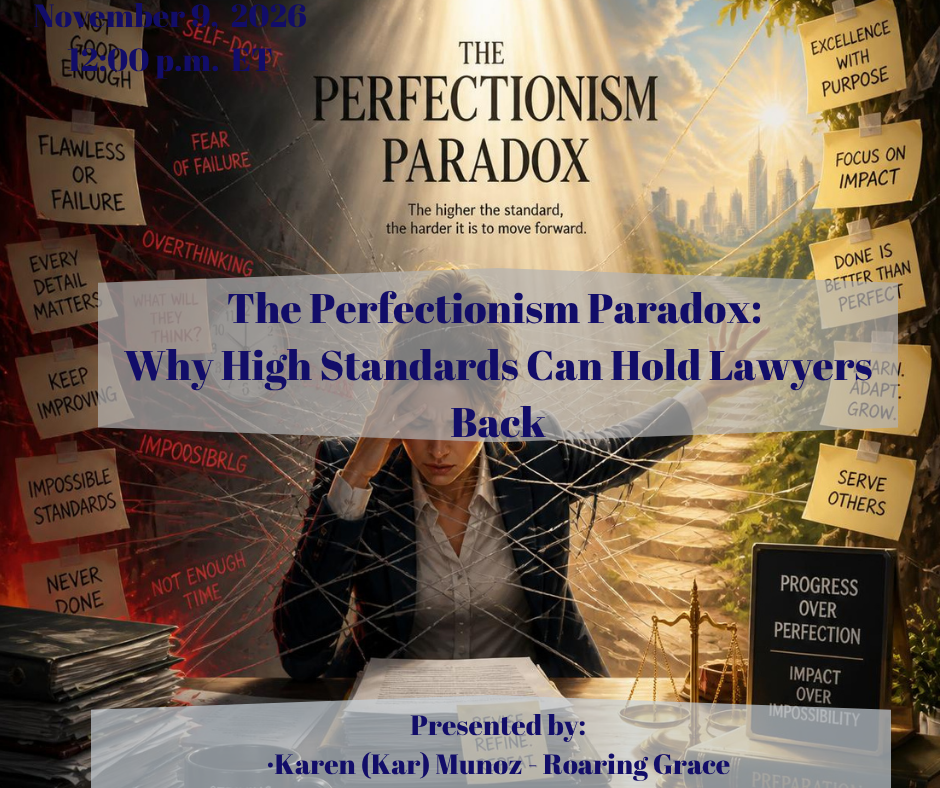
Perfectionism is often rewarded in the legal profession. It drives attention to detail, thorough preparation, and high-quality advocacy. Yet when left unchecked, it can also contribute to chronic stress, anxiety, burnout, procrastination, self-criticism, and impaired decision-making. This program will help attorneys better understand the psychology of perfectionism, distinguish between healthy striving and maladaptive perfectionism, and recognize how perfectionistic thinking can affect professional competence, client relationships, and overall well-being. Participants will explore practical, evidence-informed strategies to preserve the strengths of perfectionism while reducing its costs, allowing them to practice with greater resilience, flexibility, and effectiveness.
Learning Objectives:

This course on trade secrets litigation provides real-world best practices through all key stages of...

Lawyers lose hundreds of billable and operational hours every year to poorly managed meetings. Unfoc...

This course is meant for lawyers of all levels and areas of practice, and in it, we will explore way...

As the largest purchaser of goods and services in the world, the United States Government requires f...

Class action litigation presents significant legal and business challenges for employers and corpora...
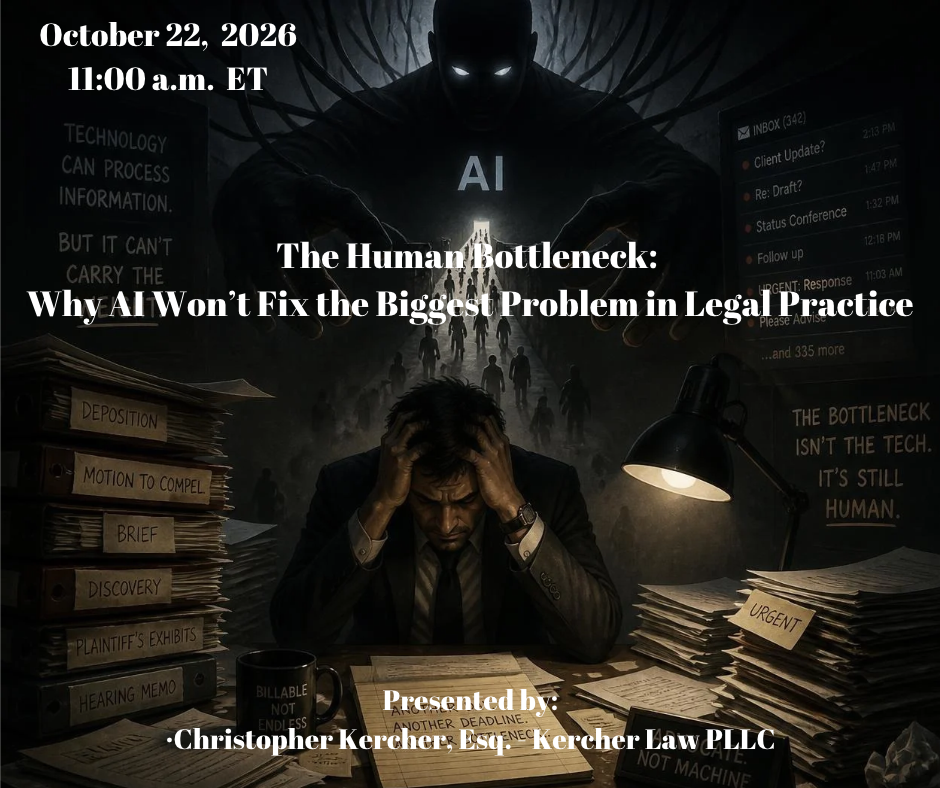
AI tools are advancing faster than legal organizations can absorb them. This program examines why th...

During this course, you will learn about best practices and strategies for retaining intellectual pr...

Class action waivers in arbitration agreements remain enforceable, but a decade of U.S. Supreme Cour...

New York City’s new Non-Primary Residence Property Surcharge—commonly known as the pied-...

Class action litigation continues to expand in both number of filings and monetary exposure, with se...