
Exciting new series on “Voice, Body and Movement for Lawyers – How to connect with the jury and find Justice Through Dramatic Technique!”
Click here to find out more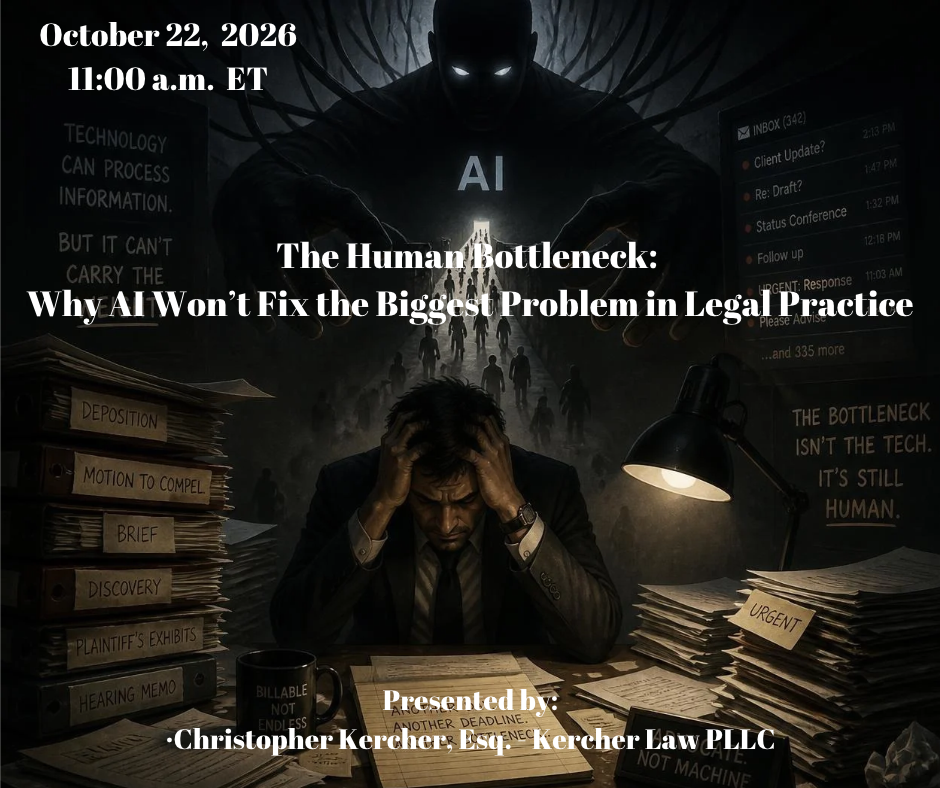
AI tools are advancing faster than legal organizations can absorb them. This program examines why the main constraints on effective legal AI are increasingly human and organizational, including workflow design, delegation, supervision, incentives, and judgment. Attorneys will learn how to identify legal tasks suited to AI assistance, preserve appropriate human oversight, diagnose the bottlenecks that keep AI from improving speed and quality, and redesign legal workflows so lawyers and AI systems complement one another.

The practice of law places legal professionals under extraordinary and often chronic stress, making ...
Class action waivers in arbitration agreements remain enforceable, but a decade of U.S. Supreme Cour...
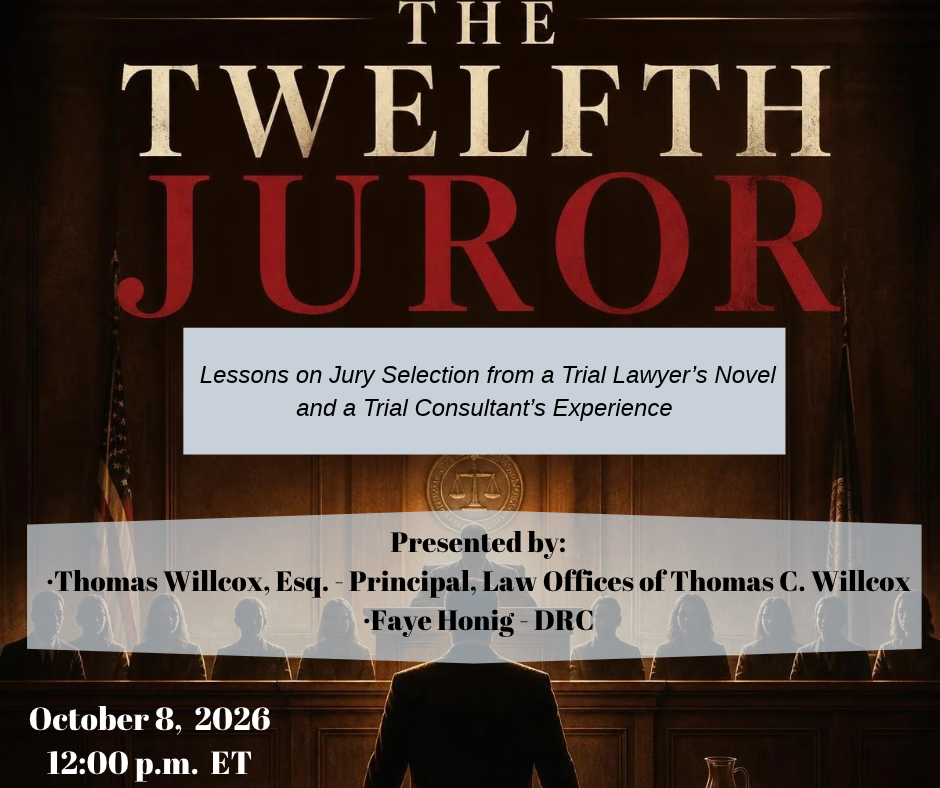
The Twelfth Juror: Lessons on Jury Selection from a Trial Lawyer’s Novel and a Trial Consultan...
"Artificial Intelligence and the Practice of Law" (updated through 2026), is a 50-slide primer desig...

Class action litigation continues to expand in both number of filings and monetary exposure, with se...

If there is one word we continue to hear more than any other term as we continue to navigate through...

This program provides trial attorneys with a thorough grounding in the three principal currency repo...

Data privacy remains one of the most rapid areas of growth in the class action space. Plaintiffs con...

New York City’s new Non-Primary Residence Property Surcharge—commonly known as the pied-...
AI agents — autonomous systems capable of planning, deciding, and acting independently across ...