
Exciting new series on “Voice, Body and Movement for Lawyers – How to connect with the jury and find Justice Through Dramatic Technique!”
Click here to find out more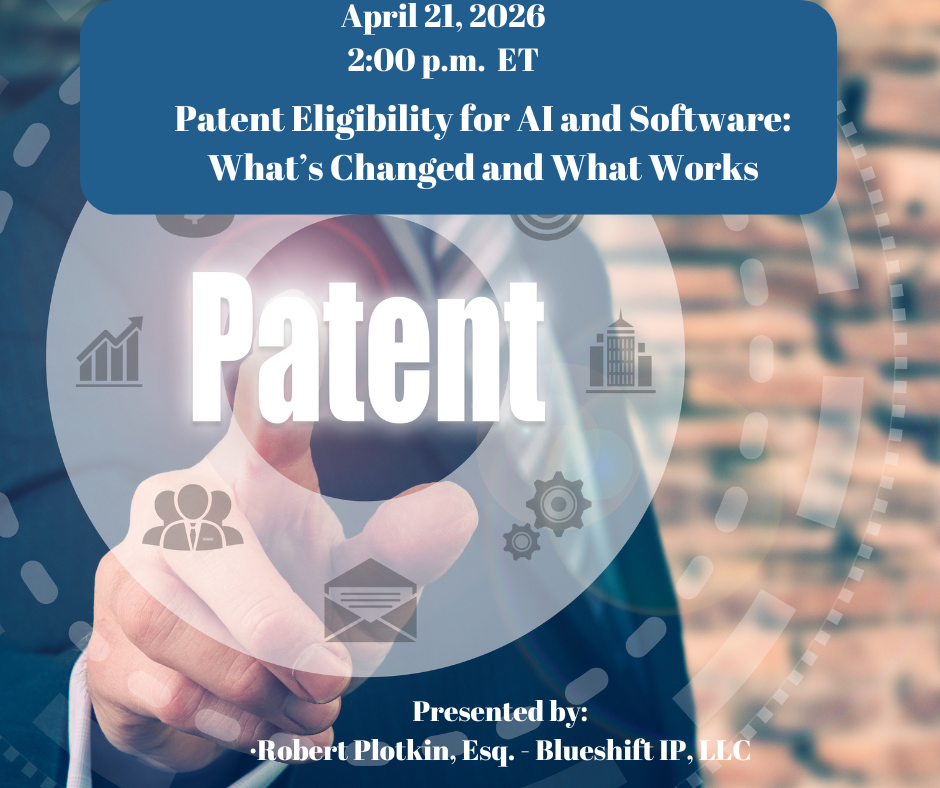
This program examines critical 2025-2026 developments in patent eligibility for software and AI inventions and provides strategic guidance for prosecution and litigation. Attendees will analyze the Federal Circuit's Recentive Analytics v. Fox decision (April 2025), which held that applying generic machine learning to new data environments is patent-ineligible absent technological improvements to the ML process itself; the August 4, 2025 memorandum from Deputy Commissioner Charles Kim reminding examiners to limit mental process groupings to claims that cannot practically be performed in the human mind, distinguish claims that recite versus merely involve judicial exceptions, analyze claims as a whole, and apply the preponderance standard for rejections; USPTO Director John Squires' precedential Ex parte Desjardins decision (September 2025, designated precedential November 2025), which reversed a PTAB § 101 rejection and found that improvements to ML model operation constitute patent-eligible technological advancements under Enfish; and Director Squires' December 4, 2025 memoranda on Subject Matter Eligibility Declarations (SMEDs), which encourage applicants to submit Rule 132 declarations with objective evidence demonstrating that claimed inventions cannot practically be performed in the human mind or provide technological improvements, and require examiners to consider and address such evidence.
Attorneys will learn to:
• Draft AI/ML claims emphasizing technological improvements that satisfy Recentive requirements.
• Leverage the Kim memo, Desjardins, and SMED guidance to challenge improper § 101 rejections.
• Prepare effective SMEDs using objective evidence and expert testimony.
• Identify patent-eligible improvements in client inventions.
• Develop prosecution strategies aligned with current USPTO policy.
• Counsel clients on portfolio development in light of these favorable developments.
In 2016, the term “materiality” as it relates to the False Claims Act made a splash in t...
Explore the transformative potential of generative AI in modern litigation. “Generative AI for...
Learn about the latest trends in Federal Suspension and Debarments. This presentation will assist yo...
Disasters, whether natural or manmade, happen. Disasters can impact the practice of law and, among o...
AI, an innovative technology that was once a supporting act for digital transformation, business str...
AI is impacting virtually every corner of practicing law. Increasing AI usage has revealed myriad ri...
Navigating Stress and Trauma in the Legal Profession, explores the unique challenges faced by legal ...
Part 1 - This program focuses specifically on cross?examining expert witnesses, whose credentials an...
This course will provide a detailed overview of the Medicare Secondary Payer act as well as provide ...
Most legal professionals are operating in survival mode whether they realize it or not. Not crisis-l...