
Exciting new series on “Voice, Body and Movement for Lawyers – How to connect with the jury and find Justice Through Dramatic Technique!”
Click here to find out more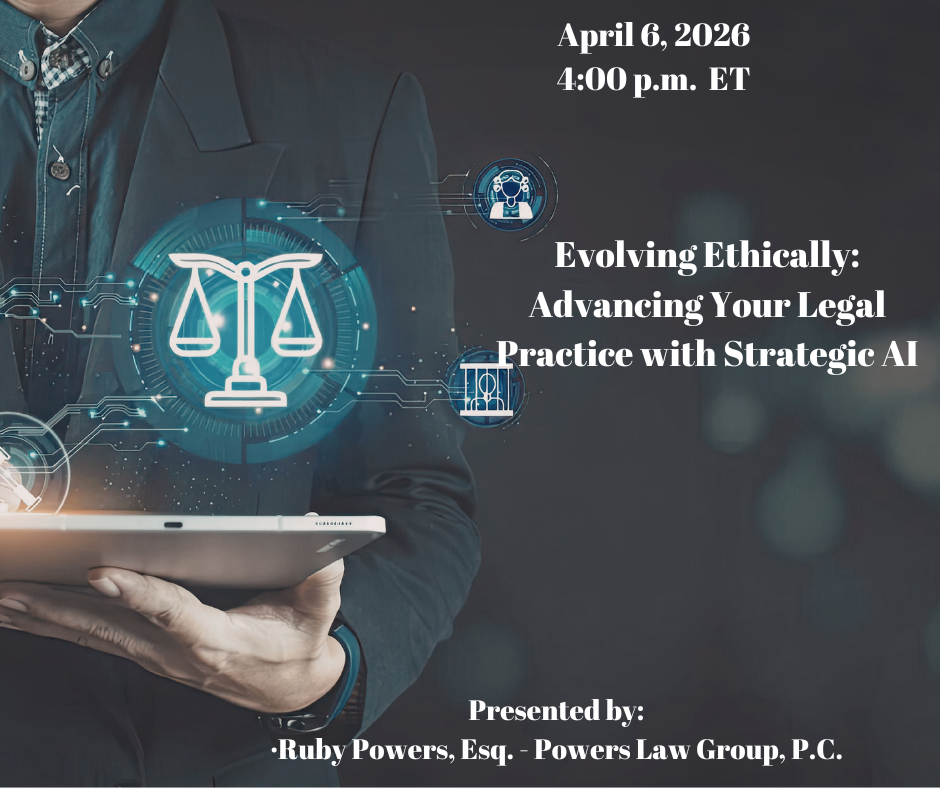
This course provides a roadmap for ethical AI integration in high-volume practices through real-world hypotheticals. Attendees will evaluate the duty of Competence (Rule 1.1) regarding AI hallucinations and Confidentiality (Rule 1.6) when vetting intake and drafting tools.
Learning objectives include establishing protocols for the Supervision (Rules 5.1 & 5.3) of AI-generated work, such as RFEs and petitions, to ensure professional accuracy and accountability.
Participants will leave with a framework for maintaining Candor (Rule 3.3) while leveraging automation to protect client interests and maintain ethical standards.

Resilience in the Workplace, delves into the critical importance of resilience in navigating the cha...
This program will address the ethical obligations of Lawyer Advocates representing clients in arbitr...
Large World Models (LWMs)— the next generation of AI systems capable of generating...
Contracting with the Federal Government is not like a business deal between two companies or a contr...
Disasters, whether natural or manmade, happen. Disasters can impact the practice of law and, among o...
Evidence Demystified Part 1 introduces core evidentiary principles, including relevance, admissibili...
This program provides attorneys with a practical and ethical framework for understanding and respons...

This program reframes domestic violence through the lens of “intimate terrorism,” equipp...

The CLE will cover the Ins and Outs of Internal Corporate Investigations, including: Back...

Many solo and small law firms assume AI governance is something only large firms need. It is not. AI...