
Exciting new series on “Voice, Body and Movement for Lawyers – How to connect with the jury and find Justice Through Dramatic Technique!”
Click here to find out more
Every IP question a client brings starts with two decisions: which regime (patent, trademark, copyright or trade secret) actually protects the asset, and which forum will decide a dispute over it. This program gives attorneys a working foundation in both, then follows a trademark from selection to international protection. Attendees will learn why each regime trades the incentive to create against public access, and where the governing law lives: Titles 35, 15 and 17, USPTO guidance, the federal courts, the Trademark Trial and Appeal Board (TTAB) and the International Trade Commission (ITC). They will also see how the spectrum of distinctiveness (generic, descriptive, suggestive, arbitrary, fanciful) drives whether a mark can be registered and how strong it is. Two worked examples carry the trademark material. The first is a clearance search that ends in a go, proceed-with-caution or no-go opinion. The second is a likelihood-of-confusion dispute, including what the TTAB can and cannot order. The program closes with the Madrid Protocol, its five-year “central attack” risk, and when a two-track filing strategy makes sense. It is designed for general practitioners, business and transactional attorneys, in-house counsel and litigators who advise clients on brands and IP but do not practice in the area every day.
Learning objectives:
During this course you will learn about the Federal Firearm Rights Restoration program and the Feder...
Every tax lawyer, business lawyer, estate planner, and white-collar practitioner eventually meets a ...
AI tools and workplace silence create the same problem for legal teams: the safeguards in place, inc...
Millions of times per year, liability insurers hire panel counsel to defend policyholders in third p...
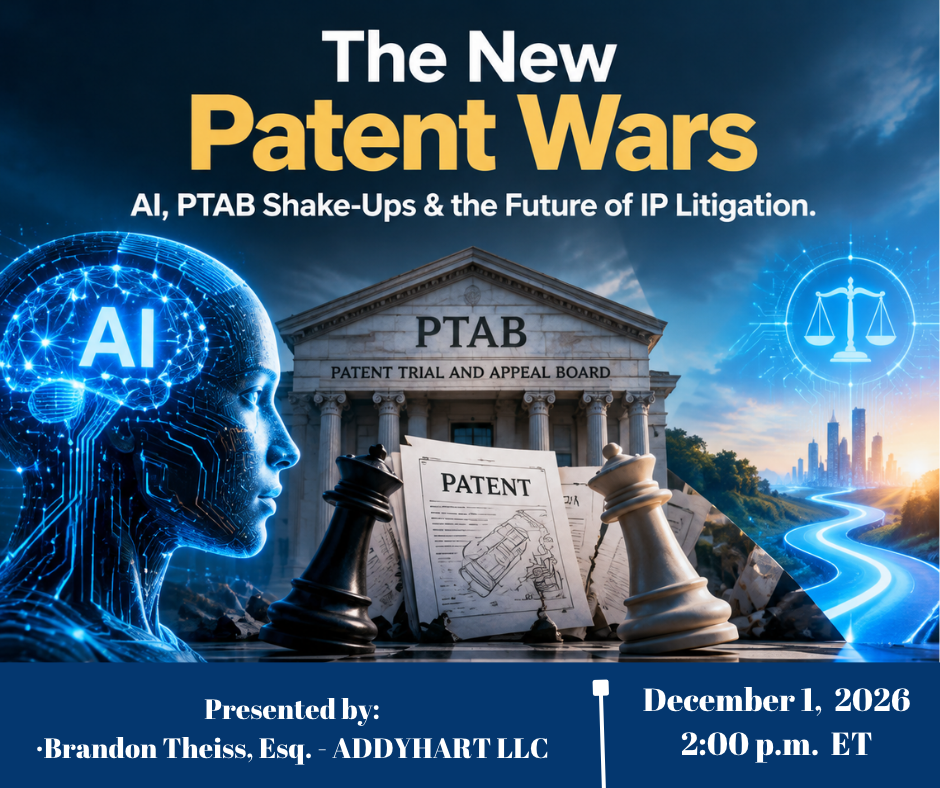
Artificial intelligence is reshaping the strategy and economics of patent litigation, from locating ...
Adverse and derogatory information often has devastating effects on a contractor's ability to win co...
“Is Your Voice Biometric Data? BIPA, AI and the New Era of Voiceprint Litigation” looks ...
This program examines the scope, jurisdiction, and exceptions to the Federal Arbitration Act (FAA), ...
In an era where technology is revolutionizing the practice of law, it is crucial for practitioners t...
This program examines the legal standards and factors courts throughout the United States apply when...